
Defining Industrial Equipment and HVAC Systems
 In large industrial facilities, the silent workhorse keeping operations running smoothly is often the HVAC system. These critical systems can account for a staggering 40–60% of a facility’s total energy consumption. This makes understanding and maintaining them not just about comfort, but about significant operational overhead and overall business success.
We know that effective climate control impacts everything from production quality to employee well-being. Whether it’s ensuring precise temperature for sensitive processes or simply providing a comfortable workspace, the right HVAC strategy is vital.
In this guide, we will explore the nuances of industrial equipment and HVAC. We will look at how they differ from commercial systems and examine their core components. We’ll also cover advanced controls, such as those monitored by Industrial HVAC analog meters, and discuss crucial maintenance practices. Our goal is to help you optimize performance and ensure longevity for your facility’s environmental control systems.
When discussing industrial equipment and HVAC, it’s crucial to understand that these systems operate under vastly different parameters compared to their commercial counterparts. Industrial HVAC systems are engineered for environments demanding precision control, managing heavy heat loads, and ensuring continuous 24/7 operation. They often need to maintain strict environmental tolerances for manufacturing processes, data centers, or laboratories, where even slight deviations can lead to product spoilage, equipment malfunction, or safety hazards.
Commercial HVAC, on the other hand, primarily focuses on occupant comfort and zoning within spaces like offices, retail stores, and educational institutions. While comfort is also a factor in industrial settings, it’s typically secondary to process requirements and equipment protection. The scale, durability, and operational demands placed on industrial systems are significantly higher, reflecting the robust nature of industrial processes.
Distinguishing Industrial and Commercial Needs
The fundamental differences between industrial and commercial HVAC systems stem from their primary objectives and the environments they serve.
- Occupant Comfort vs. Process Control: Commercial HVAC prioritizes creating a comfortable indoor environment for people, often involving sophisticated zoning to cater to diverse preferences across different areas. Industrial HVAC, however, is often driven by the need to maintain specific conditions for machinery, materials, or products. This could mean extreme temperatures, humidity levels, or air cleanliness to support a manufacturing line or protect sensitive electronics.
- Scale and Load Capacity: Industrial facilities typically encompass much larger volumes and often generate substantial internal heat loads from machinery, ovens, or production processes. Industrial HVAC systems must be designed to handle these massive thermal loads and provide consistent performance under continuous, heavy-duty operation. Commercial systems, while large, generally deal with more predictable and lower heat gains from people, lighting, and office equipment.
- Durability and Construction: Industrial environments are often harsher, with exposure to dust, chemicals, vibrations, and extreme temperatures. Consequently, industrial HVAC equipment is built with more rugged materials and robust construction to withstand these conditions and ensure a longer operational lifespan. Commercial units are generally lighter-duty, designed for cleaner, less demanding indoor or rooftop placements.
- Airflow Velocity and Distribution: Industrial applications frequently require high-velocity airflow to effectively remove contaminants, exhaust fumes, or distribute conditioned air across vast spaces. This often involves powerful fans and specialized ductwork to ensure uniform conditions or targeted ventilation. Commercial systems typically use moderate airflow velocities designed for minimal noise and draft-free comfort.
- Maintenance Frequency and Complexity: Due to their critical role and demanding operating conditions, industrial HVAC systems often require more frequent and specialized maintenance. Downtime can be extremely costly, so proactive and predictive maintenance strategies are paramount. Commercial systems also require maintenance, but the consequences of a temporary outage are generally less severe.
To summarize these distinctions, consider the following table:
Feature Industrial HVAC Commercial HVAC Primary Goal Process control, equipment protection, safety Occupant comfort, indoor air quality Load Capacity High, often continuous and heavy heat loads Moderate, variable, based on occupancy/lighting Precision High (e.g., +/- 1°F, specific humidity) Moderate (e.g., +/- 3-5°F) Durability Rugged, built for harsh environments Standard, built for office/retail environments Airflow High velocity, targeted, contaminant removal Moderate velocity, uniform, draft-free Operation Often 24/7, critical, minimal downtime Typically business hours, less critical downtime Maintenance Frequent, specialized, proactive, predictive Regular, general, preventative Cost Higher initial and operational costs Lower initial and operational costs Core Components and System Architectures
The effectiveness of any industrial or commercial HVAC system hinges on its core components working in harmony. While the specific configurations vary widely, several fundamental elements are common across most systems, from compact packaged units to expansive central plants. Understanding these components is key to appreciating the complexity and functionality of modern climate control.
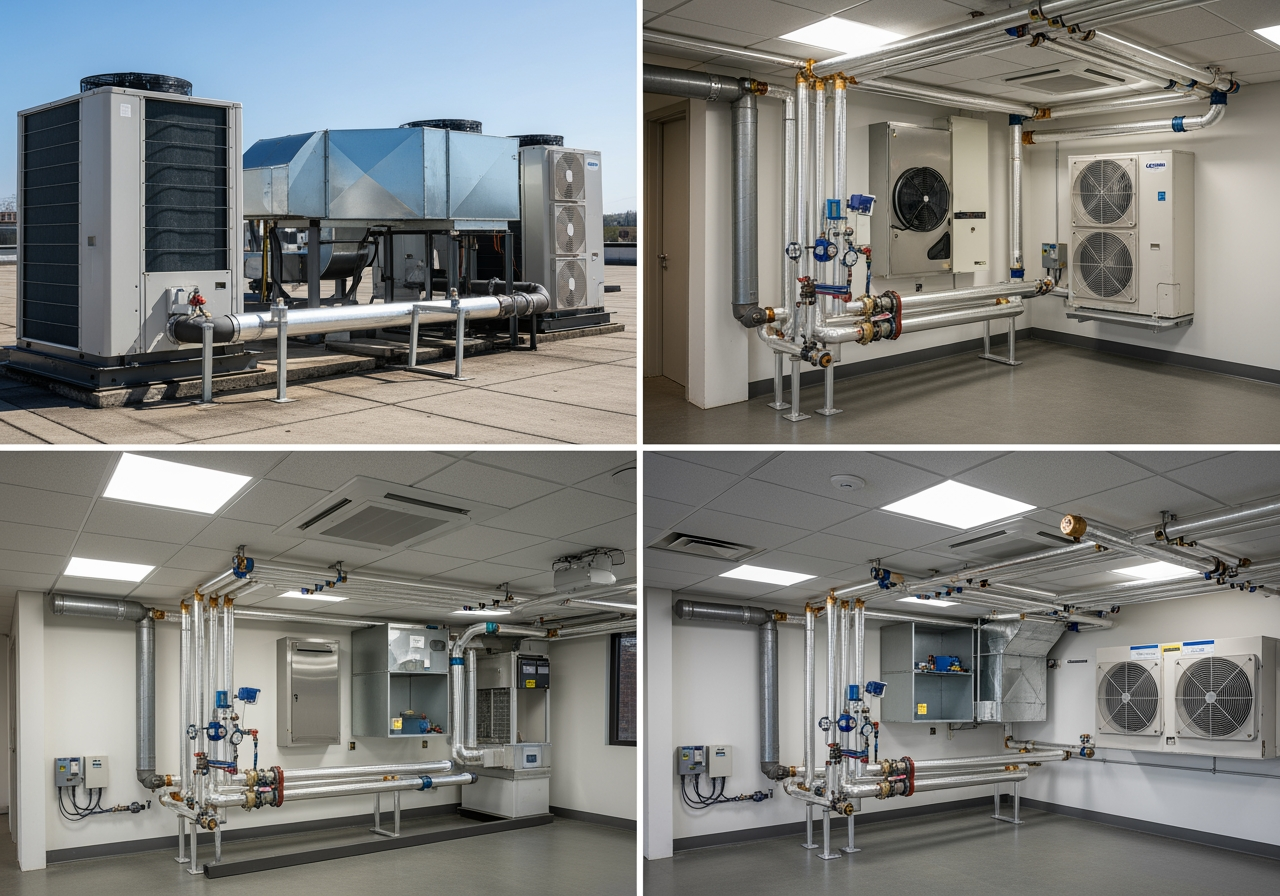
Common system architectures include rooftop units (RTUs), which are self-contained systems popular for their space-saving design and ease of installation. Variable Refrigerant Flow (VRF) or Variable Refrigerant Volume (VRV) systems offer highly efficient, multi-zone control, ideal for buildings with diverse heating and cooling needs. Split systems separate the condensing unit (outdoor) from the air handler (indoor), providing flexibility in installation and often quieter indoor operation. Packaged units, like RTUs, house all components in a single cabinet, simplifying installation but requiring larger footprints.
At the heart of these systems are critical components such as:
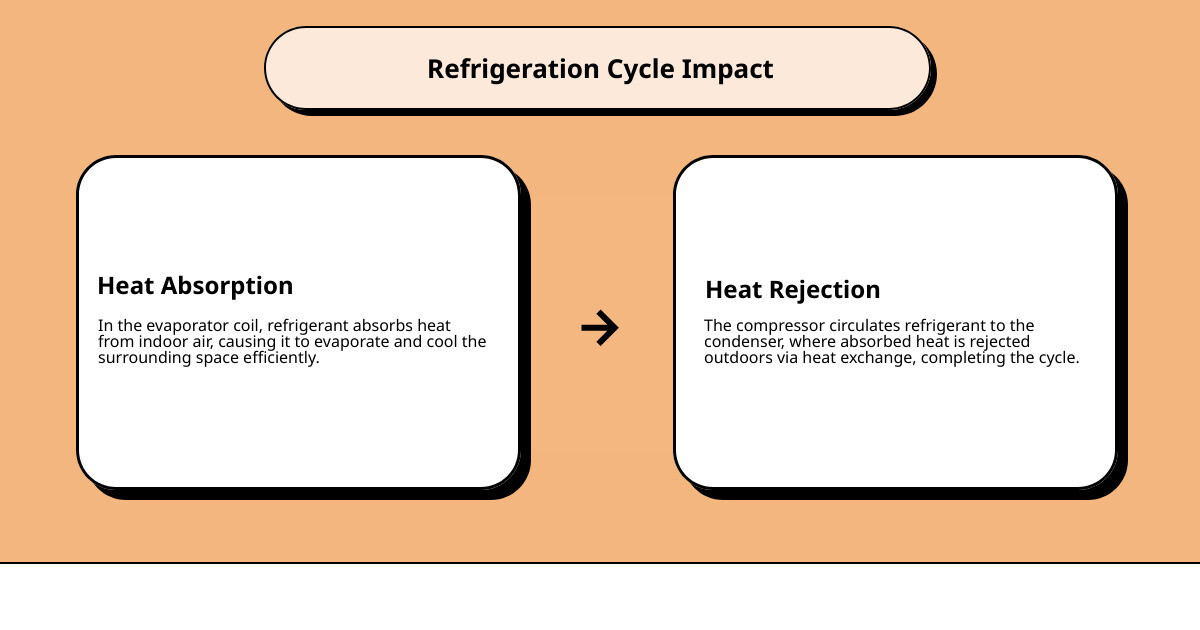
- Compressors: These are the workhorses of the refrigeration cycle, responsible for compressing refrigerant gas and increasing its temperature and pressure. Different types, like scroll, rotary, or screw compressors, are chosen based on capacity and efficiency requirements.
- Heat Exchangers: These devices facilitate the transfer of heat between two fluids without them mixing. In HVAC, they include evaporators (absorbing heat from the air) and condensers (releasing heat to the outside).
- Evaporator and Cooling Coils: Located within the air handler, these coils contain cold refrigerant that absorbs heat from the indoor air, cooling and often dehumidifying it.
- Air Handlers (AHUs): Large metal boxes containing fans, heating/cooling coils, filters, and other components. They draw in air, condition it, and distribute it throughout the building via ductwork.
- Fans and Blowers: Essential for moving air across coils and through duct systems. Industrial applications often use powerful centrifugal or axial fans to handle large air volumes and high static pressures.
- Filters and Dampers: Filters remove airborne contaminants, protecting both equipment and indoor air quality. Dampers control airflow volume and direction within the ductwork.
- Thermostats and Controls: These are the “brains” of the system, monitoring temperatures and humidity, and sending signals to activate or deactivate components to maintain desired conditions.
For facilities seeking comprehensive solutions and reliable support for these complex systems, partnering with providers offering broad HVAC equipment expertise is invaluable. This ensures access to the right equipment, proper installation, and ongoing maintenance.
Air Distribution and Ventilation Fundamentals
Beyond the core equipment, how air is moved and managed within a facility is fundamental to HVAC performance. This involves several key aspects:
- Make-up Air Systems: In industrial settings where large volumes of air are exhausted (e.g., from fume hoods, paint booths, or industrial processes), make-up air units are critical. They introduce conditioned outdoor air to replace the exhausted air, preventing negative pressure issues, drafts, and uncontrolled infiltration. This process ensures proper pressure balancing, maintains indoor air quality, and protects building structures.
- Ductwork: The network of ducts is responsible for delivering conditioned air from the air handler to various zones and returning stale air for re-conditioning. Proper sizing, sealing, and insulation of ductwork are essential for efficiency and effective air distribution.
- Blowers and Fans: These components generate the necessary airflow to overcome resistance in the ductwork and coils, ensuring air reaches all parts of the conditioned space.
- Dampers: Adjustable plates within the ductwork that regulate airflow to different zones or control the mixture of fresh and recirculated air.
- Filtration: A multi-stage filtration system is often employed in industrial HVAC to remove particulates, allergens, and even chemical contaminants from the air, crucial for maintaining indoor air quality and protecting sensitive equipment.
- Humidity Adjustment: Industrial processes often require precise humidity control. Humidifiers add moisture, while dehumidifiers (often integrated with cooling coils) remove it, ensuring optimal conditions for products or processes.
- Outdoor Air Systems: These systems manage the intake of fresh outdoor air for ventilation, which is vital for diluting indoor pollutants and maintaining healthy indoor air quality. The amount of outdoor air required is often dictated by building codes and the specific activities within the facility.
Enhancing Performance with Controls and Automation
Modern industrial and commercial HVAC systems are far more than just machines that heat or cool air; they are sophisticated networks managed by advanced controls and automation. These technologies are pivotal in optimizing energy use, maintaining precise environmental conditions, and ensuring operational reliability.
At the core of this intelligence are Building Management Systems (BMS) or Building Automation Systems (BAS). These integrated platforms allow operators to monitor, control, and manage all aspects of a facility’s HVAC infrastructure from a centralized location. This includes scheduling, temperature setpoints, fan speeds, and even integrating with other building systems like lighting and security.
Precision control is often achieved through devices like ATC Temperature PID Controllers or West Temperature Controllers. PID (Proportional-Integral-Derivative) controllers are particularly effective in industrial settings because they can maintain a setpoint with extreme accuracy, responding dynamically to changes in load or environmental conditions. This is critical for processes where even minor temperature fluctuations can impact product quality or safety.
The Role of Sensors and Smart Technology
Sensors are the eyes and ears of an HVAC system, providing real-time data that fuels automation and control. Temperature sensors, such as RTDs or thermocouples, are ubiquitous, monitoring air, water, and surface temperatures. Pressure transducers measure static and differential pressures across coils and filters, indicating airflow issues or filter loading. Flow meters track the movement of fluids like water or refrigerant.
Beyond basic sensing, smart technology and IoT (Internet of Things) integration are transforming HVAC management:
- Remote Monitoring and Control: IoT-enabled sensors and controllers allow facility managers to monitor system performance and adjust settings remotely via web interfaces or mobile apps. This capability is invaluable for multi-site operations or for quickly responding to issues outside of normal working hours.
- Predictive Maintenance: By collecting and analyzing continuous data from sensors, systems can identify subtle changes that indicate impending equipment failure. This allows for predictive maintenance, where repairs are scheduled before a breakdown occurs, minimizing downtime and extending equipment lifespan.
- Real-time Data and Analytics: Advanced analytics platforms process vast amounts of sensor data to identify inefficiencies, optimize operational schedules, and provide insights into energy consumption patterns. This data-driven approach supports continuous improvement and cost reduction.
- System Calibration and Optimization: Smart systems can self-calibrate or provide alerts when sensors drift out of calibration, ensuring accuracy. They can also dynamically adjust settings based on occupancy, weather forecasts, or energy prices, optimizing performance in real-time.
- Automated Alerts and Alarms: When critical parameters deviate from setpoints or equipment malfunctions, the system can automatically generate alerts, notifying maintenance personnel via email, text, or the BMS interface, enabling rapid response.
Furthermore, technologies like Variable Frequency Drives (VFDs) are integral to energy efficiency. VFDs adjust the speed of motors in fans and pumps based on demand, rather than operating at a constant, maximum speed. This significantly reduces energy consumption, especially during periods of partial load. Demand-controlled ventilation, which uses CO2 sensors to modulate the amount of fresh outdoor air based on occupancy, is another smart strategy for balancing indoor air quality with energy savings.
The integration of these controls, sensors, and automation capabilities elevates HVAC systems from mere climate regulators to intelligent, responsive environmental management platforms, crucial for modern facilities.
Maintenance, Efficiency, and Lifecycle Planning
Effective maintenance, a focus on energy efficiency, and strategic lifecycle planning are paramount for maximizing the return on investment in industrial HVAC systems. Given that industrial HVAC equipment typically has a lifecycle of 15–25 years, depending on usage and system type, a long-term perspective is essential. Proactive maintenance not only extends this lifespan but also ensures consistent performance and mitigates costly breakdowns.
Indoor air quality (IAQ) is another critical aspect, particularly in industrial and commercial settings. Poor IAQ can impact employee health, productivity, and even the quality of manufactured goods. Maintaining good IAQ involves robust filtration systems, adequate ventilation rates, and humidity control. Regular replacement of air filters, monitoring CO2 levels, and ensuring proper air exchange are key practices.
Maintenance Protocols for Industrial Equipment and HVAC
Industrial HVAC systems are complex and operate under demanding conditions, necessitating stringent maintenance protocols to ensure longevity and efficiency.
- Routine Inspections: Regular visual inspections of all components, including coils, fans, belts, and electrical connections, can identify potential issues before they escalate. This includes checking for wear and tear, corrosion, or unusual noises.
- Coil Cleaning: Evaporator and condenser coils can accumulate dirt and debris, reducing heat transfer efficiency. Regular cleaning is crucial for maintaining optimal performance and preventing increased energy consumption.
- Sensor Calibration: Over time, sensors for temperature, humidity, pressure, and CO2 can drift out of calibration, leading to inaccurate readings and inefficient system operation. Periodic calibration ensures these “eyes and ears” of the system provide reliable data.
- Leak Detection and Refrigerant Management: Refrigerant leaks not only harm the environment but also significantly reduce cooling capacity and increase energy use. Regular leak checks and proper refrigerant handling are vital.
- Lubrication and Belt Replacement: Moving parts like fan motors and bearings require proper lubrication to prevent premature wear. Belts should be inspected for tension and wear, and replaced as needed.
- Electrical System Checks: Inspecting wiring, connections, contactors, and motor starters ensures reliable electrical operation and prevents unexpected outages.
- Ductwork Inspection and Cleaning: Ensuring ductwork is clean, sealed, and free from obstructions guarantees efficient air delivery and prevents energy loss.
A comprehensive preventative maintenance schedule, tailored to the specific equipment and operational demands of the facility, is the cornerstone of system longevity and efficiency.
Optimizing Efficiency in Industrial Equipment and HVAC
Energy efficiency is not just a buzzword; it’s a critical financial and environmental imperative for industrial HVAC. As these systems can consume 40–60% of a facility’s total energy, even incremental improvements can lead to substantial savings.
- High-Efficiency Equipment: Investing in equipment with high-efficiency ratings, such as Trane IntelliCore™ Large Split Systems with efficiency ratings up to 16.3 IEER, can drastically reduce energy consumption. These systems, available in 20-120 tons capacity, offer advanced technology for improved performance.
- Total Cost of Ownership (TCO): When procuring new systems or considering upgrades, focusing on TCO rather than just initial purchase price is crucial. An upgraded energy-efficient HVAC system, for example, could reduce annual energy use from 1,000,000 kWh to 700,000 kWh, saving $36,000 per year at an average cost of $0.12/kWh. These savings quickly offset higher upfront costs.
- Variable Frequency Drives (VFDs): As mentioned, VFDs on fans and pumps can adjust motor speeds to match actual load requirements, leading to significant energy reductions, especially in systems with fluctuating demand.
- Smart Controls and Automation: Intelligent building management systems, demand-controlled ventilation, and predictive maintenance capabilities all contribute to optimizing energy use by ensuring systems operate only when and how they are needed.
- Heat Recovery Systems: In industrial processes that generate significant waste heat, heat recovery ventilators (HRVs) or energy recovery ventilators (ERVs) can capture this heat and use it to pre-condition incoming fresh air, reducing the load on the primary heating or cooling system.
- Multi-Site Standardization and Procurement: For organizations with multiple facilities, standardizing HVAC systems across sites can simplify procurement, streamline maintenance, and lead to better bulk pricing for equipment and parts. Developing clear procurement KPIs (Key Performance Indicators) and checklists ensures that efficiency, reliability, and long-term support are prioritized. This approach also facilitates easier training for maintenance staff and consistent performance across the enterprise.
By combining robust maintenance practices with a strategic focus on energy-efficient technologies and lifecycle planning, facilities can significantly reduce operational costs, enhance reliability, and contribute to sustainability goals.
Frequently Asked Questions about Industrial HVAC
Navigating the complexities of industrial HVAC can raise numerous questions for facility managers and business owners. Here, we address some of the most common inquiries.
What are the main differences between industrial and commercial HVAC?
The core distinctions lie in their purpose, scale, and operational demands. Industrial HVAC systems are engineered for industrial precision, often needing to maintain extremely tight environmental tolerances for manufacturing processes, product storage, or sensitive equipment. They handle significantly larger and more dynamic load capacities, frequently operating 24/7 under heavy-duty conditions. The equipment is typically more rugged and durable to withstand harsh industrial environments. Commercial HVAC, conversely, focuses on commercial comfort, providing comfortable indoor environments for people in offices, retail spaces, or schools, with less stringent environmental controls and generally lower, more predictable load requirements.
How do RTUs and VRF systems compare for large facilities?
Rooftop Units (RTUs) are self-contained, packaged systems that house all heating, cooling, and ventilation components in a single unit, typically installed on a building’s roof. Their advantages include space efficiency (freeing up indoor space), simpler installation, and easier maintenance due to centralized components. They are often a cost-effective solution for large, open-plan commercial spaces or industrial facilities with uniform heating/cooling needs.
Variable Refrigerant Flow (VRF) or Variable Refrigerant Volume (VRV) systems, on the other hand, offer highly efficient, multi-zone control. They consist of a single outdoor condensing unit connected to multiple indoor units, each capable of providing individualized heating or cooling. VRF systems excel in providing zoned control, allowing different areas of a large facility to maintain separate temperatures simultaneously. This makes them ideal for buildings with varied occupancy, diverse thermal loads, or where precise, localized comfort is required. While more complex to install, their energy efficiency and flexibility can lead to significant operational savings over time.
Why is make-up air essential for industrial air quality?
Make-up air systems are crucial for industrial facilities, especially those with processes that involve exhausting large volumes of indoor air (e.g., welding fumes, chemical vapors, paint booth exhaust). When air is exhausted, it creates a negative pressure inside the building, which can lead to several problems:
- Pressure Balance: Make-up air replaces the exhausted air, maintaining a balanced indoor pressure. Without it, negative pressure can cause drafts through unsealed openings, make doors difficult to open or close, and draw in unconditioned air and contaminants from unintended sources.
- Stale Air Replacement: It ensures a continuous supply of fresh, conditioned outdoor air, diluting indoor pollutants and maintaining good indoor air quality.
- Exhaust Compensation: Make-up air directly supports the effectiveness of exhaust systems by providing the necessary volume of air to be removed, ensuring proper ventilation and contaminant removal.
- Draft Prevention: By introducing conditioned air in a controlled manner, make-up air systems prevent uncomfortable and energy-wasting drafts that would otherwise occur as outdoor air infiltrates randomly.
- Contaminant Dilution: In environments with airborne contaminants, a steady supply of fresh make-up air is vital for diluting these substances to safe levels, protecting worker health and product integrity.
Make-up air systems are fundamental to maintaining a healthy, safe, and efficient industrial environment.
Conclusion
The realm of industrial equipment and HVAC is characterized by complexity, critical operational demands, and a profound impact on a facility’s bottom line. From the intricate differences between industrial and commercial systems to the fundamental role of core components, air distribution, and advanced controls, every aspect contributes to overall performance.
We’ve seen that system reliability is not a luxury but a necessity, driven by precision control, heavy heat loads, and continuous operation. Energy optimization, through high-efficiency equipment, VFDs, and smart automation, offers significant opportunities for cost savings and sustainability. Strategic procurement, especially for multi-site operations, ensures consistency and long-term value.
Mastering industrial HVAC is about achieving operational excellence. It’s about intelligently designing, meticulously maintaining, and continuously optimizing these vital systems to ensure precise environmental control, safeguard processes, protect assets, and foster a productive, safe environment for personnel. By embracing these principles, facilities can ensure the long-term performance and efficiency of their critical climate control infrastructure.