
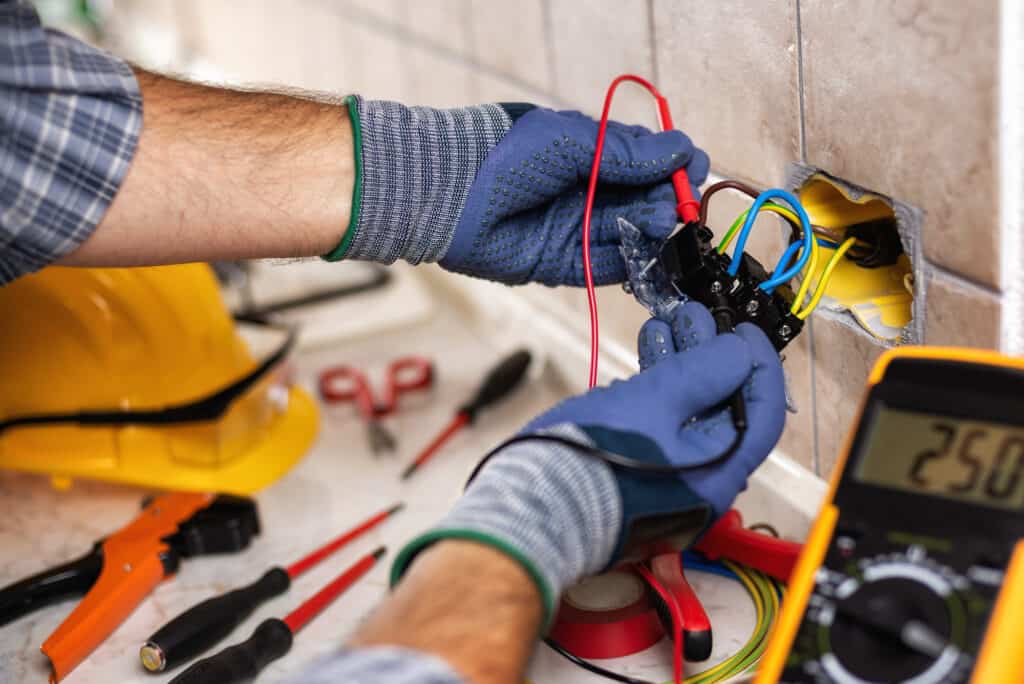
Commercial electrical maintenance is most effective when it is treated as an ongoing building responsibility, not a response to the latest outage or failed fixture. A qualified commercial electrician can handle technical inspections, testing, repairs, and upgrades, while facility teams can support the process through observation, recordkeeping, and safe access to equipment.
Electricity supports far more than lights. It may also serve heating and cooling equipment, security systems, data networks, pumps, refrigeration, machinery, and life-safety equipment. A written maintenance plan helps building managers recognize changes in system condition before a small concern becomes a disruptive failure.
Why Commercial Electrical Maintenance Needs a Formal Plan
Reactive repairs are sometimes unavoidable, but they should not be the only maintenance strategy. Equipment is exposed to heat, dust, moisture, vibration, changing electrical loads, and normal wear. Regular inspections and condition checks create opportunities to prioritize repairs, plan shutdowns, and protect critical operations.
What a Commercial Electrical Maintenance Plan Should Cover
Start with an asset list that identifies each major component, its location, purpose, age, condition, and importance to the building. When comparing qualified electrical companies for specialized work, facility managers can use this inventory to clearly describe the equipment involved and the scope of the concern.
- Main service equipment, transformers, distribution panels, breakers, and disconnects.
- Interior, exterior, emergency, and exit lighting.
- Grounding and bonding components.
- Generators, transfer switches, batteries, and uninterruptible power supplies.
- Motors, pumps, HVAC connections, controls, electrical rooms, and access clearances.
Step 1: Build a Complete Equipment Record
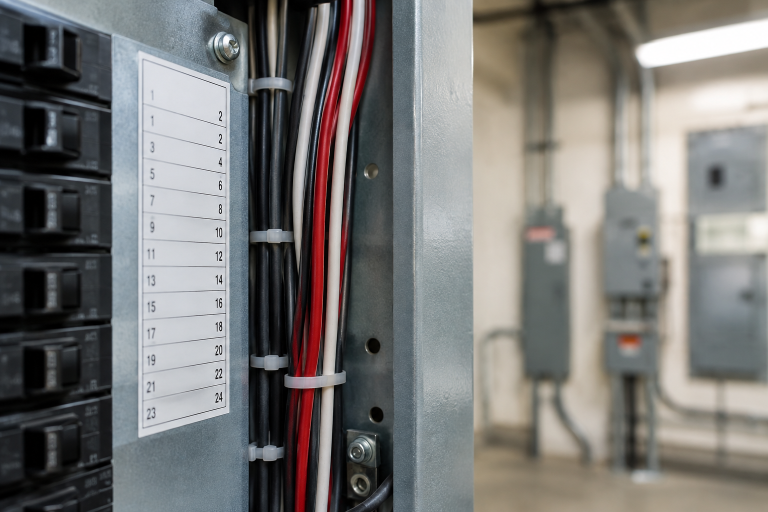
Walk through the property and document major electrical assets. Include photographs, manufacturer information, service history, circuit labels, and visible condition. Note damaged covers, corrosion, moisture, unusual sounds, heat, odors, blocked panels, or faded labels. Accurate records matter during normal maintenance and during an urgent shutdown.
For example, two similar-looking panels may serve very different loads. One might supply general office lighting, while another supports a server room or refrigeration equipment. Clear, current identification helps prevent delays and confusion.
Step 2: Set Inspection Intervals by Risk
A single schedule does not fit every property. A quiet office, restaurant, warehouse, health care setting, and manufacturing operation can place very different demands on electrical equipment. Inspection intervals should reflect operating hours, equipment history, environmental conditions, critical loads, and changes to the building.
- Identify equipment that supports safety or essential operations.
- Review past repairs, overloads, and recurring breaker trips.
- Consider heat, dust, moisture, vibration, and chemical exposure.
- Assign responsibility for inspections, corrective work, and follow-up.
- Reassess the schedule after renovations, new equipment, outages, or major repairs.
Step 3: Inspect Panels, Wiring, and Connections
Visible inspections reveal conditions needing prompt attention. Keep panel areas clean, dry, and accessible. Electrical rooms should be free of storage, with panels intact and labeled. Discoloration, scorch marks, corrosion, damaged insulation, missing knockouts, or heat issues should be evaluated by qualified personnel. Staff should not open energized equipment or perform technical testing unless trained and authorized, as electrical work involves hazards like shocks, arc flash, and falls. Electrical safety guides emphasize hazard recognition and safe practices.
Step 4: Maintain Lighting and Emergency Systems
Lighting maintenance includes more than replacing lamps. During regular walkthroughs, check emergency lights, exit signs, exterior fixtures, occupancy sensors, timers, and lighting controls. Look for flickering, delayed startup, repeated lamp failure, damaged fixtures, or dark areas near entrances, walkways, loading zones, and stairs.
Test emergency and exit lighting in accordance with applicable requirements and the equipment manufacturer’s instructions. Replace failed batteries, lamps, or fixtures promptly, and document the result of each test.
Step 5: Review Backup Power and Critical Loads
Generators, transfer switches, battery systems, and uninterruptible power supplies may sit idle for long periods, but they must operate when power is lost. Maintain a written list of critical loads, such as fire alarms, security equipment, communications, refrigeration, pumps, data systems, and medical equipment. Testing, fuel checks, battery checks, ventilation reviews, and maintenance records all support readiness.
Step 6: Use Testing and Documentation to Find Problems Early
Qualified personnel can use visual inspections, load measurements, voltage checks, torque verification, insulation testing, grounding tests, and infrared scans as needed. Thermal imaging detects heat patterns, but warmth alone doesn’t identify causes. Interpret results carefully before fixing issues. Record date, equipment, issues, results, actions, and follow-up. Tracking helps identify repeated problems like breaker trips or equipment decline. Preventive and predictive maintenance planning can help teams use inspection results and condition data to prioritize work, rather than treating each service call as an isolated event.
Step 7: Connect Maintenance With Worker Training
Employees should know how to report buzzing equipment, burning odors, warm outlets, damaged cords, flickering lights, wet electrical areas, and unexplained shutdowns. They should also understand basic boundaries: keep unqualified workers away from exposed parts, follow lockout/tagout procedures when required, use appropriate protective equipment, and keep emergency contacts and shutdown procedures readily available.
Common Mistakes to Avoid
- Waiting for an outage before reviewing equipment condition.
- Using the same checklist and interval for every building area.
- Blocking panels with boxes, supplies, or furniture.
- Ignoring warning signs such as heat, noise, odor, or repeated trips.
- Failing to update labels after remodeling or equipment changes.
- Replacing a failed component without investigating why it failed.
Questions Facility Managers Often Ask
How often should a commercial building receive electrical maintenance?
The appropriate interval depends on the equipment type, age, condition, use, load, environment, applicable requirements, and the manufacturer’s instructions. Higher-risk or critical equipment may need more frequent review.
What signs suggest a building needs electrical attention?
Common warning signs include repeated breaker trips, flickering lights, burning smells, buzzing sounds, damaged cords, warm devices, unexplained equipment shutdowns, and water near electrical components.
Can building staff perform basic electrical checks?
Staff can safely perform visual walkthroughs and report concerns. Repairs, panel work, energized testing, and other technical tasks should be handled by qualified personnel.
Make Maintenance a Routine Business Practice
Commercial electrical maintenance works best as a steady, documented process. A complete equipment record, risk-based schedule, safe reporting culture, and reliable follow-up system can help build teams recognize issues sooner and plan repairs with less disruption.