

Plastic surgery is a medical field that often sparks curiosity. Many people think it is only about improving looks. But its reach is far wider. This specialty helps people in two key ways: by restoring what was lost or damaged, and by enhancing natural features. It combines surgical skill with an artistic eye.
In this extensive guide, we will explore the fascinating journey of plastic surgery. We will trace its roots from ancient times to its advanced state in May 2026. We will clearly explain the differences between reconstructive and cosmetic procedures. Our discussion will cover common treatments and the latest trends, like minimally invasive options.
We will also shed light on the training plastic surgeons receive. We will talk about the benefits and risks involved. Finally, we will offer advice on choosing a qualified surgeon. Join us as we uncover the many aspects of this transformative medical practice.
The term “plastic surgery” itself holds a rich history, far predating the synthetic materials we commonly associate with the word “plastic” today. Its etymology stems from the ancient Greek word “plastikos,” meaning “to mold” or “to form.” This perfectly encapsulates the specialty’s core principle: to reshape and reconstruct living tissue. The first recorded surgical use of the term dates back to 1816, well before the invention of modern plastics. This unique insight highlights that plastic surgery, at its heart, is about the artistic and scientific manipulation of the body’s own tissues to achieve a desired form or function.
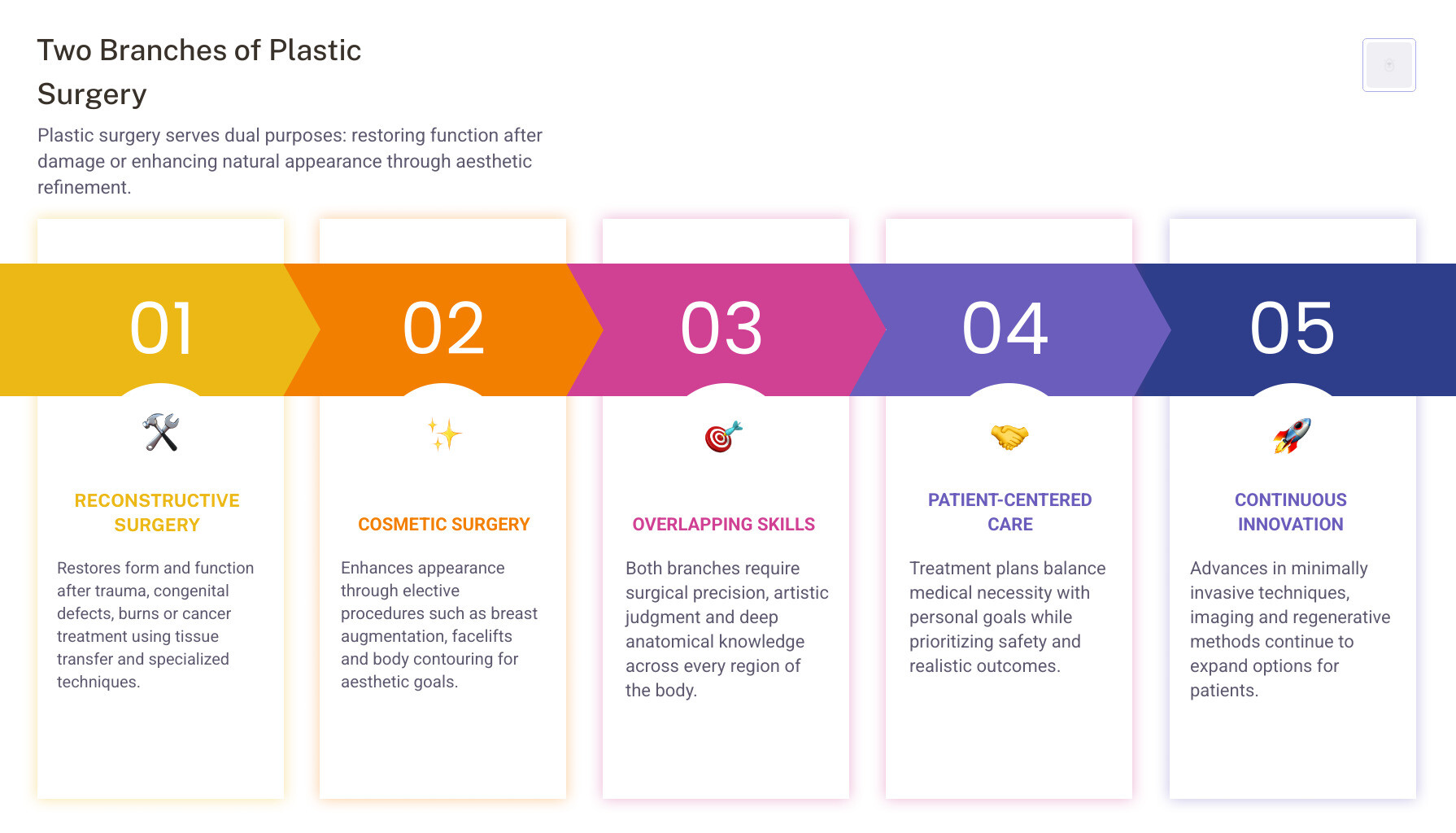
Plastic surgery is a diverse medical specialty that overlaps with nearly all other surgical fields, precisely because its focus isn’t on a distinct anatomical region but rather on the restoration and enhancement of form and function across the entire body. It is broadly categorized into two main branches: reconstructive plastic surgery and cosmetic (or aesthetic) plastic surgery. While both require immense skill and precision, their primary objectives differ significantly.
Ancient Origins and Historical Milestones
The practice of reshaping the human body is not a modern invention; its roots stretch back thousands of years. The earliest known records of reconstructive surgery appear in ancient India, documented around 800 BCE in the Sushruta Samhita. This ancient Sanskrit text details sophisticated techniques for nasal reconstruction, using skin flaps from the cheek or forehead – a method remarkably similar to some techniques still employed today. These early practitioners demonstrated an understanding of tissue transfer and wound healing that was centuries ahead of its time.
As civilizations progressed, so did the understanding and application of surgical principles. During the Middle Ages, surgical advancements were often slow, but the Renaissance brought a renewed interest in anatomy and surgical innovation. A pivotal figure from this era was Gaspare Tagliacozzi, an Italian surgeon who, in the late 16th century, popularized a rhinoplasty procedure using a skin flap from the upper arm. This intricate technique involved attaching a flap of skin from the patient’s arm to the nose, allowing it to “take” over several weeks before being detached. A notable example of this period’s reconstructive efforts includes Federico da Montefeltro, Duke of Urbino, who, after sustaining severe facial injuries in a jousting accident, underwent nasal reconstruction.
Further contributions came from the Islamic Golden Age. Al-Zahrawi, a renowned Arab physician from the 10th century, documented what is thought to be the first attempt at reduction mammaplasty for gynecomastia, a condition involving enlarged male breasts. These historical milestones underscore the continuous human endeavor to restore and improve the body, laying the groundwork for the advanced techniques we see in plastic surgery today. Exploring the rich history of these practices offers a deeper appreciation for the field’s enduring legacy.

Distinguishing Reconstructive and Cosmetic Plastic Surgery
While board-certified plastic surgeons perform both reconstructive and cosmetic procedures and aim to improve patients’ well-being, their fundamental goals and motivations are distinct.
Reconstructive Plastic Surgery focuses on restoring function and appearance to body parts that have been affected by congenital disabilities, trauma, disease, or developmental abnormalities. The primary objective is to correct structural defects or damage, allowing the patient to live a more normal life. This often involves medically necessary procedures that address physical impairments or significant disfigurement. Examples include:
- Repairing cleft lip and palate in infants.
- Reconstructing breasts after mastectomy due to cancer.
- Repairing severe burns and their resulting scars.
- Correcting hand deformities or injuries to restore dexterity.
- Addressing facial trauma following accidents.
Cosmetic Plastic Surgery, on the other hand, is primarily concerned with enhancing aesthetic appeal. Its goal is to improve symmetry, proportion, and overall appearance, often addressing concerns that are not medically necessary but contribute to a patient’s self-confidence and body image. These procedures are typically elective and are chosen by individuals seeking to refine their natural features or reverse visible signs of aging. Examples include:
- Breast augmentation to increase breast size.
- Rhinoplasty to reshape the nose.
- Facelifts to reduce wrinkles and sagging skin.
- Liposuction to remove excess fat deposits.
The key difference often lies in the motivation and medical necessity. Reconstructive surgery aims to “fix” or “restore” what is abnormal or damaged, often covered by insurance due to its functional benefits. Cosmetic surgery aims to “enhance” or “improve” what is already normal, and is generally not covered by insurance. Understanding these distinctions is crucial for anyone considering plastic surgery, as it impacts everything from procedure choice to financing options.
Modern Cosmetic Procedures and Minimally Invasive Trends
The landscape of cosmetic plastic surgery has evolved dramatically, driven by technological advancements, a deeper understanding of aesthetics, and a growing patient demand for natural-looking results with reduced downtime. In May 2026, we observe a robust interest in aesthetic health, with patients prioritizing procedures that align with their personal goals for appearance and well-being.
According to the 2024 Plastic Surgery Statistics Report, demand for plastic surgery remained steady despite economic uncertainties, indicating that patients continue to value and invest in these treatments. A significant trend highlighted in the report is the enduring popularity of minimally invasive treatments. These procedures, including injectables like Botox and various dermal fillers, continue to be highly sought after due to their minimal downtime and often immediate, noticeable results. They offer an accessible entry point for individuals exploring aesthetic enhancements without the commitment or recovery period associated with surgical interventions.
These non-surgical options are often seen as “affordable luxuries,” providing effective rejuvenation with a lower barrier to entry. They can address concerns such as wrinkles, volume loss, and skin texture, helping achieve a refreshed, youthful appearance. The rapid recovery associated with many of these treatments allows individuals to return to their daily routines almost immediately, making them particularly appealing to busy professionals and those seeking subtle enhancements.

Popular Surgical and Minimally Invasive Treatments
Today’s cosmetic plastic surgery offers a wide array of options to cater to diverse aesthetic goals. Surgical procedures remain foundational for more significant and lasting changes, while minimally invasive techniques provide excellent alternatives for subtle refinements.
Among the most common cosmetic surgical procedures performed today are:
- Liposuction: This procedure removes excess fat from specific areas, such as the abdomen, thighs, hips, and arms, creating a more contoured silhouette.
- Breast Augmentation: Often involving implants, this surgery increases breast size and improves breast shape and proportion. For those considering enhancements, understanding the factors influencing the Atlanta plastic breast lift cost can be an important first step in their journey.
- Facial Rejuvenation: This broad category includes procedures like facelifts, neck lifts, and brow lifts, designed to reduce wrinkles, tighten sagging skin, and restore a more youthful facial contour. Advanced techniques, such as the deep-plane facelift, offer comprehensive, natural-looking results.
- Mommy Makeover: A combination of procedures, typically including a tummy tuck, breast lift or augmentation, and liposuction, designed to restore a woman’s pre-pregnancy body shape.
- Body Contouring: Beyond liposuction, this includes procedures like tummy tucks (abdominoplasty), arm lifts (brachioplasty), and thigh lifts (thighplasty) that remove excess skin and fat after significant weight loss or due to aging, creating a smoother, more toned appearance.
In the realm of minimally invasive treatments, the following continue to dominate:
- Botulinum Toxin Injections (e.g., Botox): Used to temporarily relax facial muscles, reducing the appearance of dynamic wrinkles and lines, particularly on the forehead and around the eyes.
- Dermal Fillers: Injected to restore lost volume, smooth wrinkles, and enhance facial contours, such as lips, cheeks, and jawline.
- Chemical Peels and Laser Skin Resurfacing: These treatments improve skin texture, tone, and clarity by removing damaged outer layers of the skin, addressing concerns such as sun damage, fine lines, and acne scars.
- Microdermabrasion and Microneedling: Procedures that stimulate collagen production and improve skin surface by gently exfoliating or creating micro-injuries to the skin.
These procedures, both surgical and minimally invasive, are performed with an emphasis on achieving natural-looking results that complement the individual’s unique features, enhancing their confidence and overall aesthetic well-being.
Reconstructive Procedures and Post-Weight Loss Contouring
While cosmetic surgery garners significant media attention, reconstructive plastic surgery remains a vital and growing component of the field. In fact, in 2024, reconstructive procedures saw a 2% increase, marking the largest growth category in plastic surgery. This highlights the critical role plastic surgeons play in restoring health, function, and quality of life for countless individuals. These procedures address a wide range of conditions, from congenital anomalies present at birth to damage caused by trauma, disease, or medical treatments.
Common reconstructive procedures include:
- Breast Reconstruction: For women who have undergone mastectomy due to breast cancer, reconstruction can restore breast shape, symmetry, and often, sensation, significantly impacting their psychological well-being.
- Hand Surgery: This specialized area addresses injuries, congenital disabilities, and degenerative conditions of the hand and wrist, aiming to restore maximum function and dexterity.
- Cleft Lip and Palate Repair: Performed on infants, these surgeries correct congenital facial defects, enabling proper feeding, speech development, and facial aesthetics.
- Tissue Transfer and Flap Surgery: Complex techniques used to move healthy skin, muscle, or bone from one part of the body to reconstruct a damaged area, often used in severe trauma cases or cancer reconstruction.
- Burn Care and Scar Revision: Plastic surgeons are instrumental in the acute management of severe burns and the long-term revision of burn scars, improving both function and appearance.
Restoring Form and Function
The core purpose of reconstructive plastic surgery is to restore form and function, allowing patients to overcome physical challenges and improve their quality of life. For instance, in cases of severe burns, plastic surgeons work to minimize scarring and contractures, enabling greater mobility and reducing pain. Similarly, scar revision techniques can improve the appearance and comfort of scars resulting from injuries or previous surgeries.
Pediatric plastic surgery is another crucial area, addressing congenital conditions that affect children from birth. This includes not only cleft lip and palate but also craniofacial anomalies, ear deformities, and vascular malformations. These interventions are often life-changing, allowing children to develop normally and integrate socially. Physical rehabilitation often goes hand in hand with reconstructive surgery, as patients may require therapy to regain strength, flexibility, and coordination in the affected areas.
The Role of Contouring After Major Weight Loss
A rapidly evolving area within plastic surgery involves body contouring and rejuvenation following significant weight loss. With the increasing use of prescription weight loss medications, a new demographic of patients is emerging. While these medications are highly effective at reducing body mass, they often leave patients with significant excess skin and altered body features. Plastic surgeons are playing a critical role in addressing these changes.
After substantial weight loss, whether through diet and exercise, bariatric surgery, or weight loss medications, patients frequently experience skin laxity across various body regions. This excess skin can cause physical discomfort, hygiene issues, and self-consciousness. Procedures designed to address these concerns include:
- Panniculectomy: Removal of the overhanging apron of abdominal skin and fat.
- Tummy Tuck (Abdominoplasty): A more comprehensive procedure that tightens abdominal muscles and removes excess skin and fat for a flatter, firmer midsection.
- Arm Lift (Brachioplasty): Removes loose skin from the upper arms.
- Thigh Lift (Thighplasty): Addresses sagging skin on the inner or outer thighs.
- Body Lift: A comprehensive surgery that may include the abdomen, back, thighs, and buttocks, providing a complete circumferential contour.
These post-weight-loss body contouring procedures are essential for patients to fully realize the benefits of their weight-loss journey, improving physical comfort, clothing fit, and overall body image. This area reflects growing demand for plastic surgeons’ specialized skills.
Surgeon Qualifications, Training, and Patient Safety
Choosing a plastic surgeon is one of the most critical decisions a patient will make. A surgeon’s qualifications, training, and certifications directly impact the safety and success of any procedure. We emphasize that patients should always seek out board-certified plastic surgeons.
To become a board-certified plastic surgeon, an individual must complete a rigorous and extensive educational and training pathway:
- Medical School: Four years of medical school to earn an M.D. or D.O. degree.
- Residency Training: Typically six to eight years of postgraduate training, which includes a general surgery residency followed by a specialized plastic surgery residency. This intensive period provides hands-on experience across the full spectrum of plastic surgery procedures, both reconstructive and cosmetic.
- Board Certification: After residency, surgeons must pass comprehensive oral and written examinations administered by the American Board of Plastic Surgery (ABPS). This board is the only one recognized by the American Board of Medical Specialties (ABMS) that certifies plastic surgeons. Certification signifies that a surgeon has met the highest standards of education, experience, and clinical judgment. ASPS represents more than 9,000 board-certified plastic surgeons worldwide and is recognized as a leading authority on cosmetic and reconstructive surgery.
This stringent process ensures that board-certified plastic surgeons possess the deep anatomical knowledge, surgical skill, and ethical commitment required to provide safe and effective care. They are also committed to continuous medical education, staying up to date with the latest techniques and advancements in the field. Patient safety is paramount, and board-certified surgeons adhere to strict clinical standards and ethical practices, often operating in accredited surgical facilities.
For patients researching surgery away from home, location is also part of the selection process. Anyone consulting a plastic surgeon in miami should ask how pre-operative assessments, recovery time, and follow-up appointments will be arranged, particularly if travel is involved. Checking these practical details alongside a surgeon’s qualifications helps patients understand what ongoing care would require before making a decision.
Balancing Benefits and Surgical Risks
Like any medical intervention, plastic surgery procedures come with potential benefits and inherent risks. Understanding both sides is crucial for making an informed decision.
Potential Benefits:
- Enhanced Self-Confidence: Many patients report a significant boost in self-esteem and body image after achieving their desired aesthetic or functional improvements.
- Improved Quality of Life: Reconstructive procedures can restore function, alleviate pain, and correct disfigurements, leading to a dramatically improved daily life.
- Psychological Well-being: Addressing long-standing physical insecurities can positively impact mental health, reducing anxiety and depression related to appearance.
- Physical Comfort: Procedures like breast reduction or body contouring after weight loss can relieve physical discomforts such as back pain or skin irritation.
- Natural-Looking Results: With advanced techniques and skilled surgeons, results are often subtle and harmonious, enhancing natural features rather than creating an artificial look. For some, the journey to a more confident self begins with exploring the many benefits of cosmetic surgery.
Potential Risks: While rare, surgical risks remain. These can include:
- Anesthesia Complications: Reactions to anesthesia, though modern anesthesia is very safe.
- Infection: Any surgical incision carries a risk of infection.
- Bleeding and Hematoma: Accumulation of blood under the skin.
- Scarring: While surgeons aim to minimize scars, some scarring is inevitable.
- Numbness or Nerve Damage: Temporary or, in rare cases, permanent changes in sensation.
- Unsatisfactory Aesthetic Outcome: Despite best efforts, results may not fully meet patient expectations.
- Asymmetry: Slight differences between body sides.
A thorough consultation with a qualified surgeon will include a detailed discussion of all potential complications specific to the chosen cosmetic surgery procedure, ensuring patients have realistic expectations and a complete understanding of the process.
Key Considerations Before Undergoing Plastic Surgery
Embarking on a plastic surgery journey requires careful consideration and thorough preparation. We believe that informed patients make the best decisions for their health and well-being. Before undergoing any procedure, several factors should be meticulously evaluated.
- Surgeon Selection and Board Certification: This is arguably the most critical step. Always verify that your surgeon is board-certified by the American Board of Plastic Surgery. This ensures they have undergone the most rigorous training and adhere to the highest standards of patient care. When considering plastic surgery in Atlanta, for instance, seeking a top board-certified plastic surgeon in Atlanta, Georgia, is paramount. For detailed guidance on this, consulting a board-certified plastic surgeon in Atlanta is highly recommended.
- Personalized Consultation: A comprehensive consultation is essential. This is your opportunity to discuss your goals, ask questions, and understand the proposed procedure, its risks, benefits, and alternatives. A good surgeon will listen attentively, provide honest feedback, and help you establish realistic expectations.
- Recovery Timeline and Lifestyle Impact: Understand the recovery period required for your chosen procedure. This includes downtime from work or daily activities, post-operative care, and any restrictions. Plan for adequate support during your recovery.
- Facility Accreditation: Ensure that the surgical facility is accredited by recognized organizations (e.g., AAAASF, AAAHC, JCAHO). This confirms that the facility meets stringent safety and quality standards.
- Cost and Financing: Understand the total cost of the procedure, including surgeon’s fees, anesthesia, facility fees, and post-operative care. Explore available financing options if needed. You can often find information on plastic surgery prices directly from clinics.
- Overall Health and Candidacy: Be honest about your medical history and current health status. Certain health conditions can increase surgical risks. Your surgeon will assess if you are a suitable candidate for the procedure.
- Psychological Readiness: Ensure you are mentally and emotionally prepared for surgery and its outcomes. Plastic surgery should be a personal decision for self-improvement, not to please others or meet unrealistic ideals.
By diligently addressing these considerations, patients can approach plastic surgery with confidence and a clear understanding of what to expect, leading to safer procedures and more satisfying results. For those considering plastic surgery in Atlanta, there are specific things to know before undergoing the procedure to ensure a smooth, successful experience.
Frequently Asked Questions
Patient education is a cornerstone of responsible medical practice. We find that addressing common questions helps clarify misconceptions and empowers individuals to make informed decisions about their health and aesthetic goals.
What is the difference between cosmetic and reconstructive surgery?
The fundamental distinction lies in their primary objective and medical necessity. Reconstructive surgery aims to restore function and normal appearance to body parts affected by congenital disabilities, trauma, disease, or developmental abnormalities. It is often considered medically necessary and can be covered by insurance. Examples include breast reconstruction after mastectomy or repairing facial injuries.
Cosmetic surgery, conversely, focuses on enhancing aesthetic appeal, symmetry, and proportion. It is typically elective, performed to improve features that are already considered normal, but which the patient wishes to refine for personal reasons. These procedures, such as breast augmentation or facelifts, are generally not covered by insurance. Both types of surgery require the specialized skills of a board-certified plastic surgeon, but their motivations—functional restoration versus aesthetic enhancement—are distinct.
How do weight loss medications affect the demand for body contouring?
The recent rise in the popularity and effectiveness of prescription weight-loss medications has significantly increased demand for body-contouring procedures. While these medications are highly successful in achieving substantial weight reduction, they do not address the resulting excess skin. As patients lose significant amounts of weight, their skin, which has stretched over time, may not retract sufficiently, leading to loose, sagging skin folds on the abdomen, arms, thighs, breasts, and other areas.
This phenomenon has created a new and growing patient demographic seeking post-weight-loss rejuvenation through surgical contouring. Plastic surgeons are increasingly performing procedures such as tummy tucks, arm lifts, and thigh lifts to remove excess skin, tighten underlying tissues, and create a more toned, proportionate body shape. This allows individuals to fully appreciate and feel comfortable in their newly achieved physique, addressing physical discomforts and improving self-image.
Why is board certification crucial when choosing a surgeon?
Board certification, particularly by the American Board of Plastic Surgery (ABPS), is paramount when selecting a surgeon, as it signifies the highest level of training, expertise, and commitment to patient safety in the field. This certification is not simply a license to practice; it indicates that a surgeon has:
- Completed an accredited medical school and a rigorous residency program in plastic surgery.
- Passed comprehensive written and oral examinations demonstrating extensive knowledge across all aspects of plastic and reconstructive surgery.
- Adheres to strict ethical standards and a commitment to ongoing education and professional development.
Choosing a board-certified plastic surgeon ensures that you are entrusting your care to a professional who has met stringent national standards for clinical excellence and patient safety. This rigorous vetting process provides peace of mind, knowing your surgeon possesses the necessary skills and judgment to perform complex procedures safely and effectively, ultimately aiming for the best possible outcomes.
Conclusion
Plastic surgery, a field rooted in ancient practices of restoration and refinement, continues to evolve at a remarkable pace. From its Greek etymological origins signifying “to mold,” to the sophisticated techniques available in May 2026, it remains a specialty dedicated to both functional restoration and aesthetic enhancement. We have explored its dual branches – reconstructive and cosmetic – understanding their distinct goals yet shared commitment to improving patient well-being.
The demand for plastic surgery, including a significant rise in reconstructive procedures and a steady interest in minimally invasive treatments, underscores its enduring value in modern healthcare. As medical innovation advances, so does our ability to offer personalized, safe, and effective solutions, whether for trauma recovery, correction of congenital disabilities, post-weight-loss contouring, or aesthetic refinement.
The journey through plastic surgery is deeply personal. It is a testament to the power of human ingenuity to heal, restore, and transform. By prioritizing patient-centered care, adhering to rigorous training and safety standards, and fostering open communication, we continue to unlock the true potential of this transformative medical practice. If you are considering how plastic surgery might help you achieve your goals, we encourage you to explore options for facial rejuvenation and other procedures to enhance your confidence and well-being.