As July 2026 unfolds, Northern Colorado residents anticipate another wildfire smoke season. The microscopic PM2.5 particles from distant fires can severely impact indoor air quality, making homes unhealthy. Our HVAC systems, while providing comfort, can circulate these pollutants if not properly prepared. Protecting your family’s health and home comfort during smoky periods is vital. For comprehensive residential hvac maintenance, especially regarding smoke, homeowners need expert guidance. This article will show you how to prepare your HVAC systems for wildfire smoke season and how to leverage available utility rebates for upgrades.
In the evolving landscape of energy conservation, utility rebate programs have expanded beyond mere heating and cooling efficiency. Today, many programs recognize that improving indoor air quality (IAQ) often goes hand-in-hand with enhancing overall home energy performance. As we navigate July 2026, the focus has broadened to encompass comprehensive home solutions that reduce energy consumption while simultaneously creating healthier living environments.
Upgrades such as high-efficiency air filters, variable-speed blower motors, and smart thermostats are now frequently eligible for rebates because they directly contribute to energy savings. For instance, a variable-speed blower motor, often found in modern HVAC systems, can operate at lower speeds for longer durations, maintaining consistent temperatures and improving air filtration without the energy spikes of single-speed units. Similarly, smart thermostats optimize system operation based on occupancy and external conditions, preventing energy waste.
Mechanical ventilation controls and whole-home air purifiers, while primarily IAQ-focused, play a crucial role in tightly sealed, energy-efficient homes. In such homes, controlled ventilation is essential to prevent stale air and pollutant buildup. By integrating these systems, homeowners can achieve optimal IAQ without compromising their home’s thermal envelope. Many utility providers and state initiatives, aligning with Colorado’s clean energy goals and decarbonization incentives, now offer financial incentives for these integrated solutions. These programs aim to encourage homeowners to adopt technologies that not only reduce their carbon footprint but also protect their health from environmental hazards like wildfire smoke. This holistic approach ensures that investments in home comfort also yield significant environmental and health dividends.
Strategic Upgrades to Combat Wildfire Smoke and Improve IAQ
The increasing frequency and intensity of wildfire seasons, particularly in Northern Colorado, underscore the critical need for proactive measures to protect indoor air quality. Wildfire smoke is not just an outdoor problem; it contains a high concentration of PM2.5 particles—microscopic particulate matter less than 2.5 microns in size. These tiny particles are the primary health concern, capable of penetrating deep into the lungs and even entering the bloodstream. In 2020, a staggering 25 million people across the United States were exposed to dangerous levels of wildfire smoke, a massive increase from just a decade prior. This exposure is linked to significant health risks, including increased respiratory hospitalizations, especially for vulnerable populations such as children, older adults, pregnant individuals, and those with pre-existing respiratory or cardiovascular conditions. Wildfire-specific PM2.5 has been associated with respiratory hospitalizations up to 10 times higher than those linked to fine particles from other pollution sources.
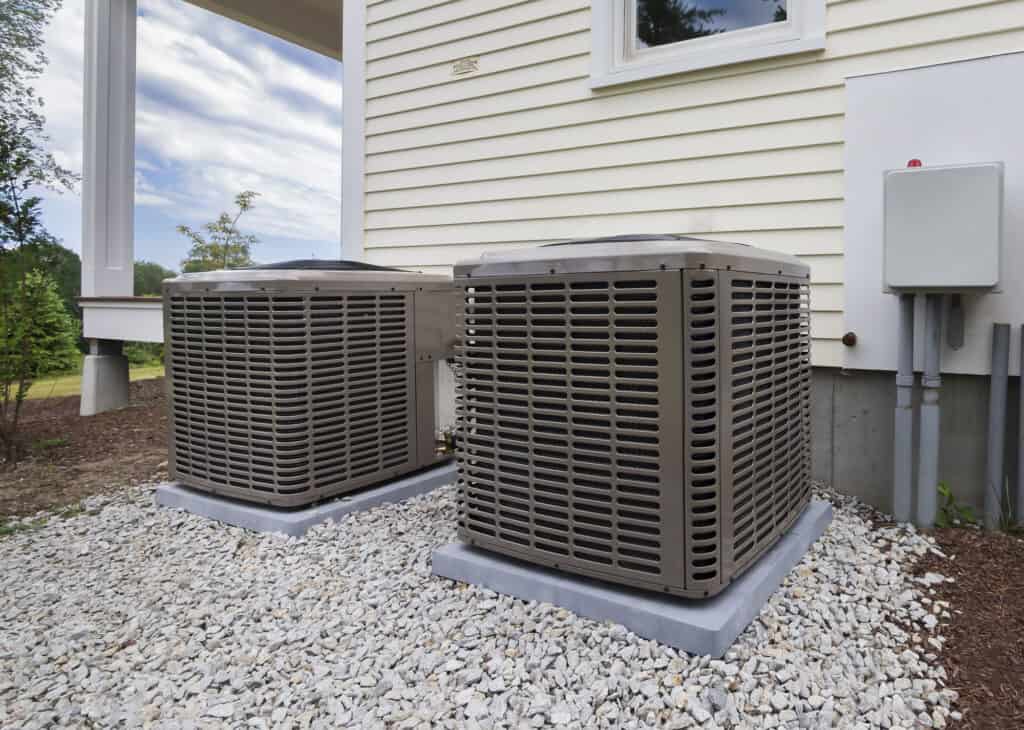
Your HVAC system plays a pivotal role in creating a safe haven from wildfire smoke. However, it requires strategic preparation and upgrades to be truly effective. For comprehensive guidance on all aspects of your residential hvac maintenance, especially concerning smoke, it’s wise to consult expert resources.
Understanding Air Filters: MERV vs. HEPA
One of the most impactful upgrades you can make is to your HVAC filter. The effectiveness of a filter in capturing wildfire smoke particles is primarily determined by its MERV (Minimum Efficiency Reporting Value) rating.
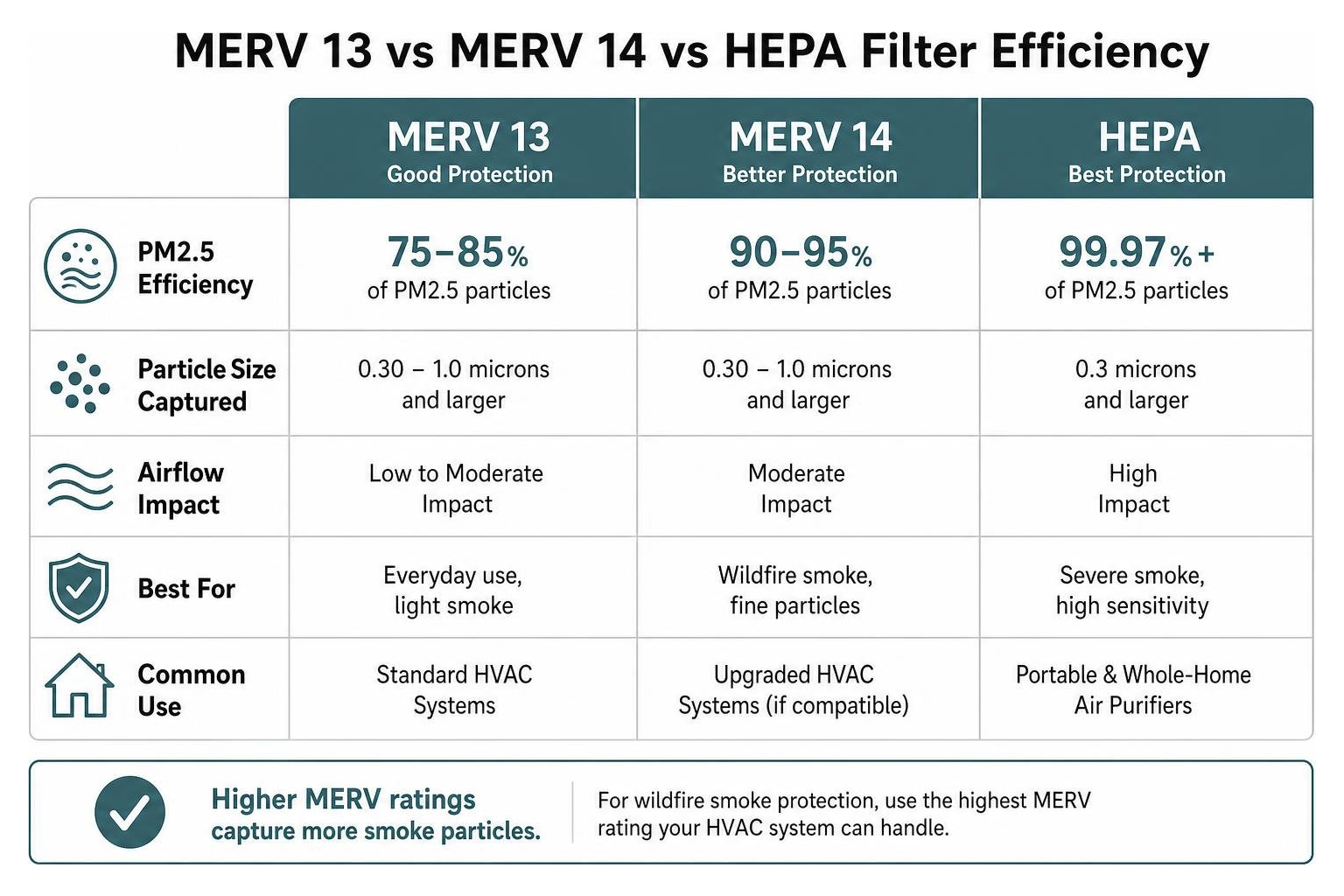
- MERV Filters: MERV ratings range from 1 to 20, with higher numbers indicating better filtration. For wildfire smoke, which consists of approximately 90% PM2.5 particles, a MERV 13 filter is the absolute minimum recommended. A MERV 14A filter, for instance, captures an average of 90% of particles between 1.0 and 3.0 microns, significantly outperforming a MERV 8A filter, which only captures 20% to 35% of the same particles. While MERV 13 filters are good, MERV 14 or even MERV 16 are preferred if your HVAC system can accommodate them without excessive airflow restriction. It’s crucial to check your system’s specifications or consult with an HVAC professional to ensure compatibility.
- HEPA Filters: A HEPA (High-Efficiency Particulate Air) filter is the gold standard for air purification. It has a minimum particle capture efficiency of 99.97% on 0.3-micron particles. While true HEPA filters are too dense for most residential HVAC systems to handle as a primary filter without significant modifications or specialized systems, they are commonly found in portable air purifiers and whole-home air purification units designed to work in conjunction with your HVAC.
Here’s a comparison of common filter efficiencies:
HVAC System Settings During a Smoke Event
Once you have the appropriate filter, how you operate your HVAC system during a smoke event is crucial:
- Recirculate Mode and Fresh Air Intake: The first step is to prevent smoke from entering your home through your HVAC system. Switch your HVAC system to “recirculate” mode, if available, or manually close the fresh air intake damper. This ensures your system is only conditioning and filtering the air already inside your home, rather than drawing in smoky outdoor air.
- Continuous Fan Operation: Should you run your HVAC fan continuously during a smoke event? Yes, generally. Running the fan continuously (setting it to “On” instead of “Auto”) helps to constantly circulate and filter indoor air, reducing PM2.5 levels.
- Trade-offs: The primary trade-off is increased energy consumption and potentially higher utility bills. However, the health benefits of cleaner indoor air often outweigh this cost during severe smoke events. Modern systems with variable-speed blower motors are more energy-efficient for continuous operation.
Filter Replacement Frequency
During wildfire season, especially in Northern Colorado where smoke can be persistent, you should change your HVAC filter much more frequently than usual.
- Normal Conditions: Typically, filters are changed every 1-3 months.
- Smoke Season: During periods of heavy smoke, inspect your filter weekly and be prepared to change it every 2-4 weeks, or even more frequently if it appears heavily soiled.
- Signs of Replacement: A visibly dirty or darkened filter, reduced airflow, or a lingering smoky odor even with the system running are all strong indicators that your filter needs immediate replacement.
Risks of Swamp Coolers (Evaporative Coolers)
Northern Colorado homes often utilize swamp coolers for efficient cooling. However, these systems pose a significant risk during smoke events.
- The Risk: Swamp coolers operate by drawing in large volumes of outdoor air, passing it over water-saturated pads, and then distributing the cooled, humidified air throughout the home. This means they actively pull smoky outdoor air directly into your living space, making indoor air quality worse.
- Mitigation: During wildfire smoke events, it is strongly recommended to turn off your swamp cooler. If cooling is absolutely necessary, and you cannot use an alternative, some homeowners attempt to mitigate the risk by covering the outdoor air intake with a high-efficiency filter (e.g., a 4-inch thick MERV 13 filter). However, this is a temporary and less effective solution, and the primary advice remains to avoid using them when smoke is present.
Home Sealing and Air Leakage
Even with the best HVAC filters and settings, smoke can infiltrate your home through countless small openings. The total air leakage in a typical house is equivalent to leaving a window open year-round.
- Sealing Gaps: Conduct a thorough inspection of your home. Seal gaps around windows and doors with weatherstripping and caulk.
- Ductwork: Inspect and seal any leaks in your ductwork, as these can draw smoke from unconditioned spaces like attics or crawl spaces directly into your living areas.
- Other Infiltration Points: Pay attention to utility penetrations, attic hatches, and fireplace dampers.
Whole-Home Air Purifiers or Portable HEPA Units
While your HVAC system with a high-MERV filter is your first line of defense, sometimes it’s not enough.
- When to Consider: If you have vulnerable populations in your home, frequently experience severe smoke events, or your HVAC system cannot accommodate a MERV 13+ filter, consider supplementing with a whole-home air purifier or portable HEPA units.
- Whole-Home Purifiers: These integrate directly into your HVAC system or ductwork, providing enhanced filtration for the entire home.
- Portable HEPA Units: Place these in rooms where family members spend the most time, such as bedrooms or living areas. Ensure they are sized appropriately for the room.
Preparing Your HVAC System Before Wildfire Season
Proactive preparation is key. Colorado’s wildfire season typically lasts from May through September, but risk exists year-round.
- Early Filter Upgrade: Install your high-MERV filter before smoke season begins, ideally in late spring (May).
- System Check-up: Schedule a professional HVAC inspection to ensure your system is operating efficiently and that all components, including dampers and fresh air intakes, are functioning correctly.
- Duct Cleaning: If you suspect your ductwork has accumulated significant dust or previous smoke residue, consider professional duct cleaning before the season to prevent it from becoming a reservoir for pollutants.
Cleaning Up and Restoring Indoor Air Quality After a Smoke Event
Once the smoke has cleared and outdoor air quality improves, it’s time to restore your home’s IAQ.
- Ventilate: Open windows and doors to air out your home, especially if you had kept them sealed for an extended period.
- Change Filters: Replace your high-MERV filter with a fresh one to remove any remaining trapped particles.
- Surface Cleaning: Wipe down all hard surfaces with a damp cloth to remove settled ash and fine particulates. Vacuum carpets and upholstery with a HEPA-filtered vacuum.
- Ductwork Inspection: If a strong smoke odor persists or you notice dark residue around vents, consider a professional HVAC and ductwork inspection. Smoke residue can cling to duct interiors and HVAC components, requiring specialized cleaning to eliminate odors and prevent recirculation.
Step-by-Step Guide to Maximizing Your Savings
Navigating utility rebates for HVAC and IAQ upgrades can seem daunting, but with a structured approach, you can maximize your savings. As we move through July 2026, many programs are in full swing, offering substantial incentives for homeowners committed to energy efficiency and healthy indoor environments.
- Research Eligibility Early: Before making any purchase decisions, thoroughly research current rebate programs available from your local utilities and federal government. Eligibility criteria, covered equipment, and application deadlines can vary significantly.
- Choose Energy Star Certified Equipment: Prioritize HVAC systems and IAQ solutions that are Energy Star certified. This certification indicates that the product meets strict energy efficiency guidelines set by the U.S. Environmental Protection Agency and the U.S. Department of Energy, making it more likely to qualify for rebates.
- Consider a Home Energy Audit: A pre-installation home energy audit can identify areas where your home is losing energy and recommend the most impactful upgrades. Some rebate programs even offer incentives for these audits. This professional assessment ensures that your chosen HVAC and IAQ upgrades are part of a comprehensive strategy for maximum efficiency.
- Professional Installation is Key: Most utility and federal rebate programs require that eligible equipment be installed by a licensed and qualified HVAC professional. This ensures proper installation, system sizing, and adherence to all safety and efficiency standards, which is often a prerequisite for rebate approval.
- Understand Application Timelines and Documentation: Pay close attention to rebate application timelines. Many programs have deadlines, and some require applications to be submitted within a certain period after installation. Keep all purchase receipts, installation invoices, and equipment specifications, as these documents are typically required for your application.
Finding Local HVAC Utility Rebates for High-Efficiency Systems
Northern Colorado residents have several avenues to explore for HVAC and IAQ upgrade rebates:
- Xcel Energy Rebates: As a major energy provider in the region, Xcel Energy frequently offers rebates for high-efficiency furnaces, air conditioners, heat pumps, and smart thermostats. Their programs are updated regularly, so checking their official website for the latest offerings is essential.
- Platte River Power Authority: For residents served by municipal utilities that receive power from Platte River Power Authority (such as Fort Collins, Longmont, Loveland, and Estes Park), there are often specific energy efficiency programs and rebates available through your local municipality. These can cover a range of HVAC and IAQ improvements.
- Municipal Utility Programs: Beyond Platte River Power Authority, individual cities and towns in Northern Colorado may have their own unique rebate programs aimed at local residents. Always check with your specific municipal utility provider.
- Federal Inflation Reduction Act (IRA) Tax Credits: The Inflation Reduction Act, passed in 2022, introduced significant federal tax credits for energy-efficient home improvements.
- 25C Tax Credits: Homeowners can claim a tax credit for up to 30% of the cost of certain energy-efficient home improvements, including high-efficiency HVAC systems (like heat pumps, central air conditioners, furnaces, and boilers) and some home energy audits, up to a maximum of $1,200 per year for certain improvements and up to $2,000 for heat pumps. This includes qualified IAQ equipment when installed as part of an eligible system.
- HOMES Program: This program, expected to roll out more broadly in the coming years, will offer rebates directly to homeowners for comprehensive energy-saving retrofits, including HVAC and IAQ upgrades, based on the amount of energy saved.
Combining IAQ Upgrades with HVAC Utility Rebates
The synergy between energy efficiency and indoor air quality means that many IAQ-focused upgrades can be bundled with or even qualify for HVAC utility rebates.
- Whole-Home HEPA Filtration Systems: When integrated into a new, high-efficiency HVAC system, a whole-home HEPA filtration system can sometimes be included in the overall rebate calculation, especially if it contributes to the system’s overall energy performance or is part of a certified “healthy home” package.
- Smart Ventilation Dampers: These devices optimize fresh air intake based on indoor air quality sensors and outdoor conditions, reducing energy waste associated with over-ventilating. When installed with a new HVAC system, they can contribute to the system’s overall efficiency rating and rebate eligibility.
- Energy Recovery Ventilators (ERVs): ERVs bring in fresh outdoor air while recovering energy from the outgoing stale air, significantly reducing the energy penalty of ventilation. They are excellent for maintaining IAQ in tightly sealed homes and are frequently eligible for energy efficiency rebates.
- Dual-Fuel Heat Pump Systems: These highly efficient systems combine an electric heat pump with a gas furnace, offering optimal heating and cooling performance. They are often eligible for substantial federal tax credits and utility rebates, and integrating high-efficiency filtration with them enhances their IAQ benefits.
Frequently Asked Questions about Home Comfort and IAQ
Homeowners often have specific questions when considering HVAC and IAQ upgrades, especially in the context of wildfire smoke and rebate opportunities. Here, we address some common inquiries.
How do MERV 13 filters affect HVAC airflow and rebate eligibility?
While higher MERV filters, such as MERV 13, are thicker and denser than standard filters, they are designed to capture significantly more particles. This increased density can lead to higher static pressure within the HVAC system, meaning the blower motor has to work harder to push air through the filter.
- Impact on Airflow: In older or undersized HVAC systems, a MERV 13 filter might restrict airflow too much, potentially reducing system efficiency, increasing energy consumption, and even damaging the blower motor.
- Modern Systems: However, most modern, high-efficiency HVAC systems are designed with powerful electronically commutated motors (ECMs) that can handle the increased static pressure from MERV 13 (and even higher) filters without significant performance degradation. These ECMs can ramp up their speed to maintain consistent airflow, often more efficiently than older motor types.
- Rebate Eligibility: When installed as part of a new, high-efficiency HVAC system, the use of MERV 13+ filters typically does not negatively impact rebate eligibility. In fact, some “healthy home” or advanced IAQ rebate programs may even encourage or require them. Always consult with an HVAC professional to ensure your system can properly accommodate a MERV 13 filter without adverse effects and to confirm its compatibility with rebate requirements.
Can I get rebates for adding a whole-home HEPA purifier to my existing system?
The eligibility for rebates on adding a whole-home HEPA purifier to an existing HVAC system varies greatly depending on the specific utility program and federal incentives available.
- Utility Program Guidelines: Some utility programs focus primarily on full HVAC system replacements or upgrades that significantly improve energy efficiency (e.g., new heat pumps, high-efficiency furnaces). These programs might not offer direct rebates for standalone IAQ equipment added to an older system. However, if the whole-home HEPA purifier is installed as part of a larger, eligible HVAC system upgrade, its cost might be included in the total project cost for rebate calculation.
- Standalone vs. Integrated Systems: Rebates are more commonly available for integrated systems where the IAQ component is part of a new, energy-efficient HVAC installation. Standalone portable HEPA units are rarely eligible for utility rebates.
- Specific IAQ Programs: Occasionally, there might be specific IAQ-focused programs, especially in regions heavily impacted by wildfire smoke, that offer incentives for such additions. It is crucial to check the most current guidelines from your local utility providers (like Xcel Energy or municipal programs) and federal programs (like those under the Inflation Reduction Act) to determine eligibility for add-on IAQ equipment.
How does wildfire smoke impact the lifespan of newly rebated HVAC systems?
Wildfire smoke, with its high concentration of fine particulate matter (PM2.5), can significantly impact the lifespan and performance of even newly installed, rebated HVAC systems if proper preventative measures are not taken.
- Particulate Buildup: The microscopic smoke particles can bypass lower-efficiency filters or accumulate rapidly on higher-efficiency filters, leading to increased particulate buildup within the system. This buildup can coat internal components, such as evaporator and condenser coils, the blower motor, and ductwork.
- Coil Cleaning: When coils become coated with smoke residue, their ability to transfer heat efficiently is severely compromised. This forces the system to work harder, leading to higher energy consumption and increased wear and tear. Regular professional coil cleaning becomes even more critical during and after wildfire seasons to maintain efficiency and prevent premature component failure.
- Filter Replacement Schedules: As discussed, frequent filter replacement is paramount. Neglecting to change filters when they are saturated with smoke particles not only reduces indoor air quality but also puts a strain on the blower motor, potentially shortening its lifespan.
- System Efficiency Degradation: Over time, the cumulative effect of smoke exposure without adequate maintenance can lead to a noticeable degradation in system efficiency. This means your newly rebated, high-efficiency system might not deliver the expected energy savings or comfort levels.
To protect your investment and ensure the longevity of your HVAC system, especially in Northern Colorado’s wildfire-prone environment, adhering to an aggressive filter replacement schedule and scheduling annual professional maintenance that includes coil inspection and cleaning is essential. Proactive preparation is the best defense against the damaging effects of wildfire smoke.
Conclusion
As Northern Colorado residents face the increasing reality of wildfire smoke season each year, preparing your HVAC system is no longer just about comfort—it’s about health and safety. By understanding the critical role of high-efficiency filtration, optimizing your system’s settings, and sealing your home against infiltration, you can create a sanctuary of clean air indoors.
Moreover, the opportunity to combine these essential health protection measures with long-term financial savings through utility rebates and federal tax credits presents a compelling case for proactive upgrades. As of July 2026, a wealth of incentives are available to support homeowners in making their homes more energy-efficient and resilient against environmental challenges.
Embracing these strategic upgrades and maintenance practices ensures not only that your family breathes cleaner air but also that your HVAC system operates efficiently for years to come. Investing in Northern Colorado clean air solutions now is an investment in your home’s value, your family’s health, and a more sustainable future.